
IDC is a popular texting abbreviation that stands for “I Don’t Care.” People use IDC meaning in text in chats, social media, texting, and online conversations to express indifference, lack of concern, emotional distance, or casual acceptance. The tone can sound neutral, dismissive, sarcastic, or relaxed depending on the context.
Just like IDC meaning in text, the term IDM meaning in text is also popular in online chats.
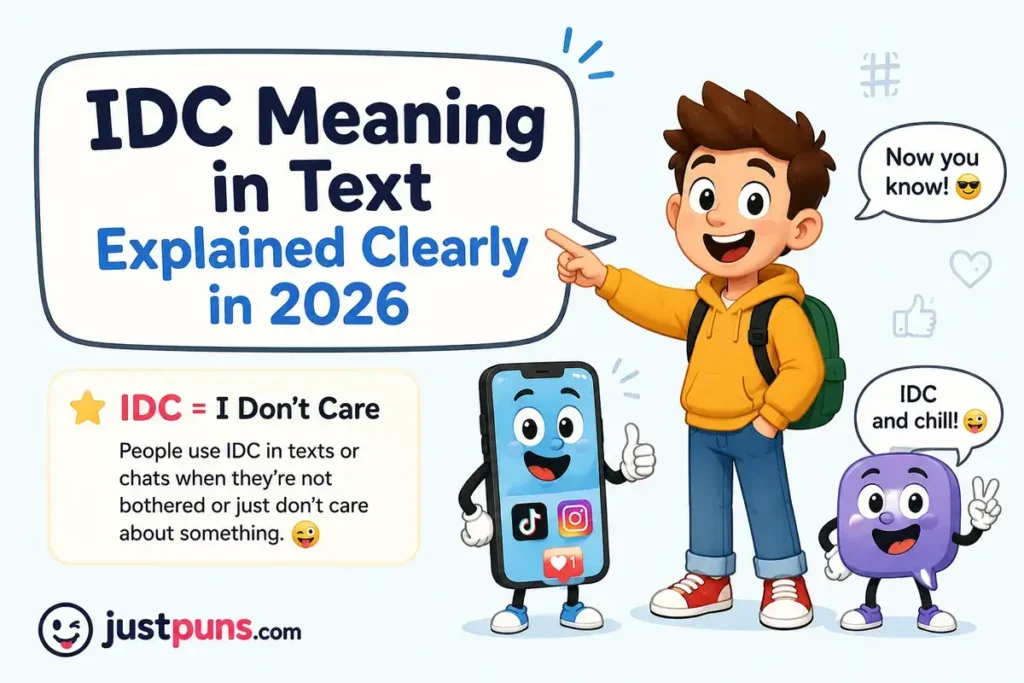
Meaning at a Glance of IDC meaning in text
| Detail | Information |
|---|---|
| Part of Speech | Internet slang abbreviation |
| Definition | Short form of “I Don’t Care” |
| Language of Origin | English internet slang |
| Context of Use | Texting, social media, online chats |
| Pronunciation | Eye Dee See |
What Does IDC Meaning in Text Mean?
IDC in text means “I Don’t Care.” It’s commonly used in online messaging when someone wants to show they are not emotionally invested in a topic, decision, or situation.
People often use IDC in casual texting because it’s faster than typing the full phrase.
Example:
“IDC where we eat tonight.”
In this sentence, the person is saying they have no strong preference.
The meaning can change slightly based on tone. Sometimes it sounds relaxed and easygoing. Other times it can sound cold, rude, or dismissive.
Deeper Meaning and Significance
Primary Meaning
The primary meaning of IDC is emotional indifference or lack of concern.
It tells another person:
- The topic is not important to me.
- I have no preference.
- I’m not emotionally affected.
It’s often used during casual conversations between friends, classmates, coworkers, or online communities.
Secondary Meaning
In some situations, IDC can carry emotional frustration, sarcasm, or passive aggression.
For example:
“IDC anymore.”
This version sounds more emotional and may suggest disappointment, exhaustion, or emotional withdrawal.
Tone matters heavily with this abbreviation.
Origin and Etymology
IDC developed during the rise of early internet chatrooms, SMS texting, and instant messaging platforms where users shortened common phrases to save time and character space.
Like LOL, BRB, and IMO, IDC became part of internet slang culture in the late 1990s and early 2000s. Over time, it spread across platforms like texting apps, Snapchat, Instagram, TikTok, Discord, and X.
Today, IDC remains one of the most widely recognized texting abbreviations online.
Examples in Sentences of IDC meaning in text
Real-Life Clarity
- “IDC what movie we watch.”
- “He said IDC and left the group chat.”
- “IDC about the drama anymore.”
- “Honestly, IDC if they disagree.”
- “IDC where we go as long as the food is good.”
Mean in Daily Life
In daily life, IDC is usually used to express flexibility or emotional distance.
Friends may use it casually when making plans:
“IDC which café we pick.”
In emotional situations, it may sound colder:
“IDC what happens now.”
The surrounding conversation determines whether the phrase sounds harmless or harsh.
Synonyms and Related Terms
Here are common alternatives and related expressions:
- It doesn’t matter to me.
- Whatever.
- No preference.
- I’m fine either way.
- Doesn’t bother me.
- I’m not worried about it.
- It’s all good.
- I could care less.
Meaning in Different Contexts
Usage in Different Contexts
| Context | Meaning of IDC |
|---|---|
| Text Messages | No preference or concern |
| Social Media | Emotional reaction or dismissiveness |
| Friend Conversations | Casual flexibility |
| Arguments | Emotional distance or frustration |
| Online Gaming | Lack of concern about outcomes |
IDC meaning in text Across Social Media Platforms
IDC is heavily used across modern social media because it’s short, emotional, and easy to understand.
On TikTok, creators often use IDC in captions for sarcastic or relatable content.
Also, Instagram, it appears in comments, memes, and story replies.
On Snapchat, IDC is common in fast casual conversations between friends.
And X, users often use the phrase during trending discussions, debates, or humorous reactions.
Meaning in Online Dating & Social Conversations
In dating conversations, IDC can either sound relaxed or emotionally detached depending on context.
Example:
“IDC where we go for dinner.”
This sounds flexible and easygoing.
But a message like:
“IDC anymore.”
can sound emotionally distant or upset.
Because texting lacks vocal tone, people sometimes misunderstand the intention behind IDC.
💬 Expand your slang vocabulary with fjb meaning in text.
How to Reply When Someone Uses IDC Meaning in Text
Your reply should match the tone of the conversation.
If the tone is casual:
- “Alright, let’s decide together.”
- “Okay, sounds good.”
- “I’ll choose then.”
If the tone feels emotional or negative:
- “You seem upset.”
- “Are you okay?”
- “We can talk about it.”
Understanding the emotional context helps avoid miscommunication.
Why IDC meaning in text Is Trending in 2026
IDC remains popular in 2026 because digital communication favors short emotional expressions. People want quick ways to express reactions without typing full sentences.
Short-form content, meme culture, and instant messaging apps continue to push abbreviations into everyday language.
Another reason IDC stays relevant is versatility. It works in jokes, casual conversations, arguments, gaming chats, dating messages, and social media posts.
- Curious about similar expressions? Read our full guide on bffr meaning in text.
Pros and Cons of Using this Term
| Pros | Cons |
|---|---|
| Fast and convenient to type | Can sound rude or dismissive |
| Widely understood online | Tone is easy to misunderstand |
| Useful in casual chats | May appear emotionally cold |
| Fits modern texting culture | Not suitable for formal communication |
Conclusion
IDC meaning in text stands for “I Don’t Care.” It’s one of the most common internet slang abbreviations used in texting, social media, and online chats. Depending on tone and context, it can express flexibility, indifference, sarcasm, frustration, or emotional distance. Because of its simplicity and versatility, IDC continues to remain popular in digital communication culture.

Ethan Walker is a digital content writer with a passion for internet trends, slang expressions, and modern communication. His goal is to make complex or confusing terms easy to understand.